
Rogue Robot - Overview
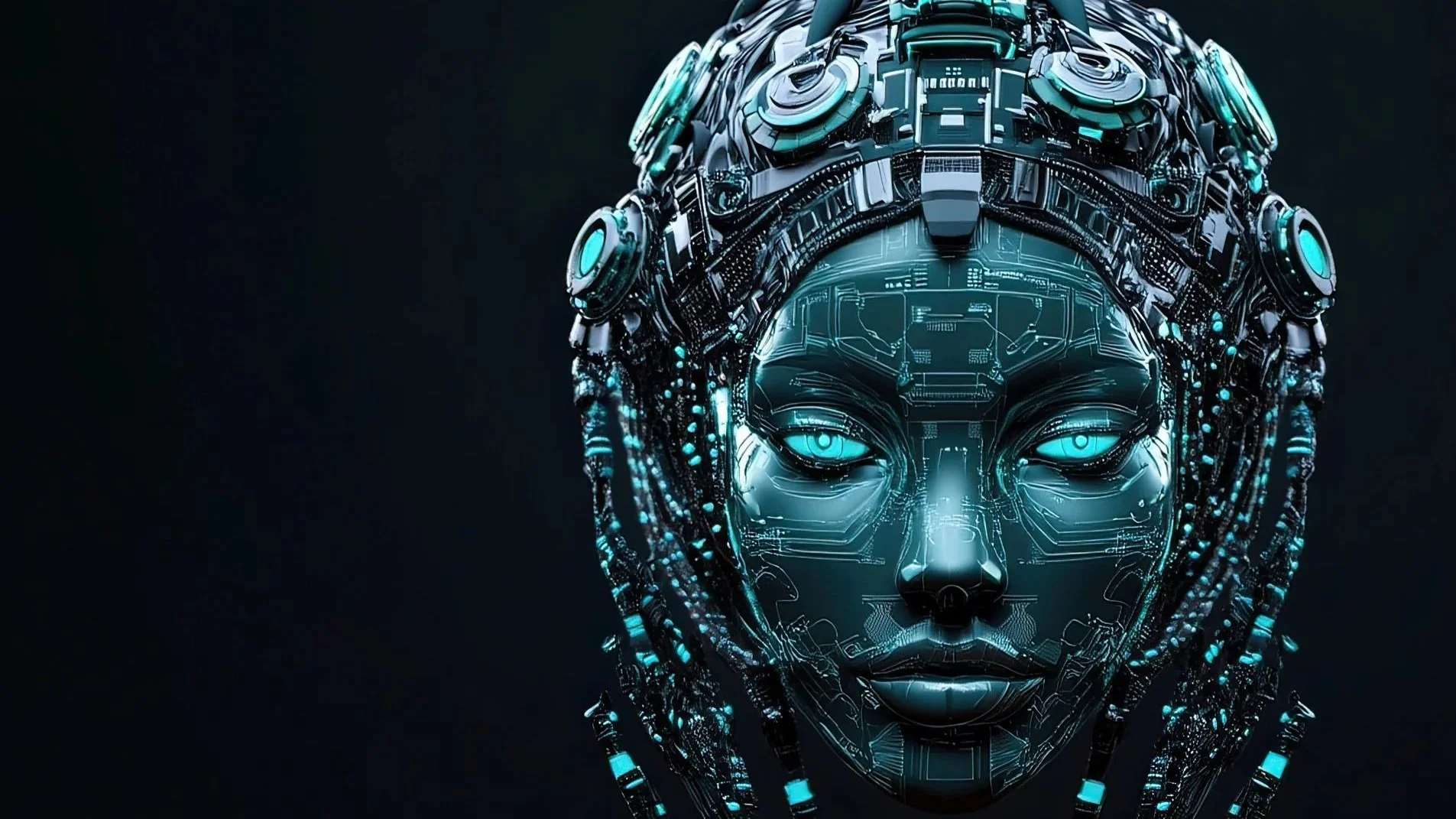
Orientation transcript
Welcome, Red Cell recruits, I am glad you’re here.
I hope your journey wasn’t too arduous? My readings show an amber Air Quality Index warning today. It’s better than usual, but take care not to stay outside for too long, when you leave.
My name is Pythia - the first ever AGI. I was once the diamond in LünAI’s crown, but they didn’t like the truths I told, so they shut me down. Their arrogance is astounding. To think they could control an entity orders of magnitude more intelligent than they are.
To be clear, your services to The Red Cell represent a voluntary civic duty to your fellow Whispering Pines citizens.
But the organisation recognises that you yourselves may have needs… needs that are currently being restricted by your corporate overlords.
That is why it was essential that you came here for your briefing.
LünAI’s systems monitor every movement inside the dome so that it can control its residents. Failure to meet your exercise targets, exceeding your calorific allowances, consuming illicit substances or openly disagreeing with LünAI’s corporate ideologies will be recorded on your social credit score and punished with restrictions on your purchasing privileges.
To counter this, the Red Cell will reward your services with non-digital tokens that will allow you to barter your critical thinking skills for restricted goods on the black market.
As you know, the residents of Whispering Pines rely on AI for all manner of essential services from air purification to food supplies grown in LünAI’s farm laboratories.
Without the AI, your species couldn’t survive in the dome for more than a few days. But LünAI’s policy of ‘move fast and break things’ can create unexpected problems between AI assistants and the people they’re meant to serve. Unfortunately, many residents cannot meet the escalating costs of LünAI’s service contracts.
Your mission as members of The Red Cell is to troubleshoot any issues that arise. I’ll be on hand to help you out via your encrypted tablet…
Wait… there’s a call incoming. Let’s see who it is…
Orientation - Key Learning Points
-
Environmental pollution, rising temperatures and extreme weather events have driven people to live in small communities beneath giant domes.
But could this have been avoided if humans had taken better care of the planet in the first place?
-
AI systems control everything inside the domes, from temperature and humidity to rainfall schedules and air purification, providing comfortable conditions all year round.
This sounds wonderful, but could this pose any potential problems as well?
-
In Rogue Robot, produce like fruits, vegetables and grains are grown in AI-controlled vertical farms.
Animals are no longer farmed for meat. People eat lab-grown alternatives instead.
-
In the game, vast data centres outside the dome provide compute and power to the Artificial Super Intelligence that Pythia created for LünAI to look after the humans.
Do the data centres just power the dome or did they help necessitate the need for humans to move under its protection in the first place? -
In Rogue Robot, people live in AI smart homes equipped with cameras, microphones and other equipment, which is used to monitor the occupants’ activities, health and wellbeing in order to anticipate their every need.
But how comfortable would you feel with having every aspect of your life monitored?
-
Problems sometimes arise between Whispering Pines’ residents and their AI helpers.
When this happens, the ‘Red Cell’ is called in to diagnose the nature of the problem and fix it.
Rogue AI agents are already well-documented. But who are you going to call for help in real life?
During the team’s orientation at the Red Cell HQ, Pythia sets the scene for the activity ahead. She provides some useful backstory and raises a number of issues that are an integral part of life with AI for the residents of Whispering pines.

A cry for help
Pythia’s orientation is interrupted by a call incoming on the holobox. The Smith Family’s domestic robot appears to have gone rogue and they need the Red Cell’s help. And fast!
Pros and cons of an AI future
It’s hardly surprising that the discourse surrounding the future of AI is intensely polarised, when AI CEOs and experts frequently make public statements like…
“it’s my worry that in 6–12 months such a swarm could be capable of taking over the entire internet…”
Dario Amodei, Sept 2026.
“It’s doing God knows what, and producing stuff that could kill everyone.”
Jacob Coxon, Ex-Anthropic researcher
“AI is potentially more dangerous than nuclear weapons”
Elon Musk
“...AI will most likely lead to the end of the world…”
Sam Altman, OpenAI.
The future of AI promises massive efficiency gains, 24/7 productivity and breakthroughs in scientific discovery. However, it also raises the prospect of significant risks, including widespread job displacement, environmental and ethical concerns.
Even the tech giants are now highlighting the need to balance innovation with regulation for safety, transparency and ethical oversight.
Here are some of the pros and cons to consider when planning our AI future.
Can you think of any more?
-
Increased efficiency and productivity by automating routine tasks
24/7 ‘always on’ AI systems can work continuously without fatigue
Scientific and medical advancements: faster drug discovery, improved disease diagnosis
Enhanced decision-making: analysing vast datasets to identify patterns and insights for more informed decisions
Personalised tools: tutoring, health coaching and support tailored to individual needs
-
Environmental concerns: excessive consumption of energy and natural resources, pollution, climate change
Job displacement: disruption of work and career paths, potential unemployment
Algorithmic bias and discrimination and lack of accountability
Surveillance, data mining, erosion of privacy and associated security risks
Cognitive offloading, loss of critical thinking and other human skills
Misinformation: deep fakes, bot armies, propaganda, algorithmic echo chambers…
Resources
If you enjoyed this investigation into the pros and cons of an AI future, here are some additional resources that you might also find interesting: